

The ad account is yours. It lives in your own Meta Business Manager with Metcalf Media added as a partner, so the pixel history and the audiences stay with your business.
The card is yours. Meta bills you directly for the media. Nothing gets marked up on the way through.
The fee is flat. No percentage of spend, because percentage pricing pays an agency to recommend a bigger budget whether or not the budget is working.
Tulsa, Oklahoma
Tulsa Marketing Agency for Service Businesses
Metcalf Media builds the website, shoots the content and runs the ads as one system. So you stop being the best-kept secret in your trade and start being the name people in your town already know.
See how the Local Lead Engine WorksThe site, the reviews, the automationsFoundation
One day on location, a quarter of contentFraming
Campaigns run to the towns you workRoof
Work produced for






























The Local Lead Engine
Three parts. You need all three to live in it.
Think of it like a house. Most businesses buy one part from one company and another from someone else, and end up with a slab and no roof. Which isn't a cheap house, it's not a house.
Foundation
Website + AI Automations
The site, the review system, and the automations that catch every lead the moment it lands. Everything else runs through this, which is why it goes in first and why nothing gets built on top of it until it works.
Framing
Content Day
One day on location at your own business. Enough video and photo to last a quarter, and the reason somebody picks you instead of the company with the same five-star rating.
Roof
Ads Launch & Management
Campaigns run to the towns you actually work, against creative worth stopping for. This is the part that puts the first two in front of people who have never heard of you.
The foundation
The website gets the lead. This is what keeps it.
Four things that run every day, including the days you're on a roof and not at a desk. This is the part of the work you actually feel.
Missed call text back
A call you can't take sends a text within seconds. Most of those people rang three companies, and the one that answers first usually keeps the job.
Automated lead follow-up
Every lead answered inside sixty seconds, day or night, and chased for a week rather than called once. Almost every business gives up after the first try, which is where the money goes.
Five-star review funnel
Every customer asked automatically the moment the job is finished, instead of whenever somebody remembers. Asked properly, most people say yes.
One-click campaigns
A text or an email out to everybody who has ever hired you, in one go. The cheapest work you'll ever book is from somebody who already paid you once.
You hear about it first. Every lead reaches you directly as well as the system, so nothing sits in a dashboard nobody opened.
Traced to what produced it. Calls and forms tracked back to the ad, page or profile that made them, so the thing that works can be given more money.
All of it's set up before a single dollar goes into advertising, because sending paid traffic at a business that can't answer it's how the money gets wasted. How the follow-up is built.
The framing
One day at your place. A quarter of content.
The ask on your calendar is a single day, and it's the reason this gets put off for years. Everything that can happen before that day happens before it.
- Before the day
The words are written first
You get the scripts before anyone arrives, so the day is reading rather than deciding. Most of what makes a shoot drag is indecision on the floor, and writing first is how that gets removed.
- The day
One day at your own business
A crew of two, at your shop, your lot, your trucks, your job site. Not a production circus, and not a rented studio a customer wouldn't recognize. Video and photography both come out of the same visit.
- After the day
Cut for where it actually runs
Vertical for reels and for paid ads, wide for the site and the profile, shot alongside each other on the same day rather than quoted later as a second job.
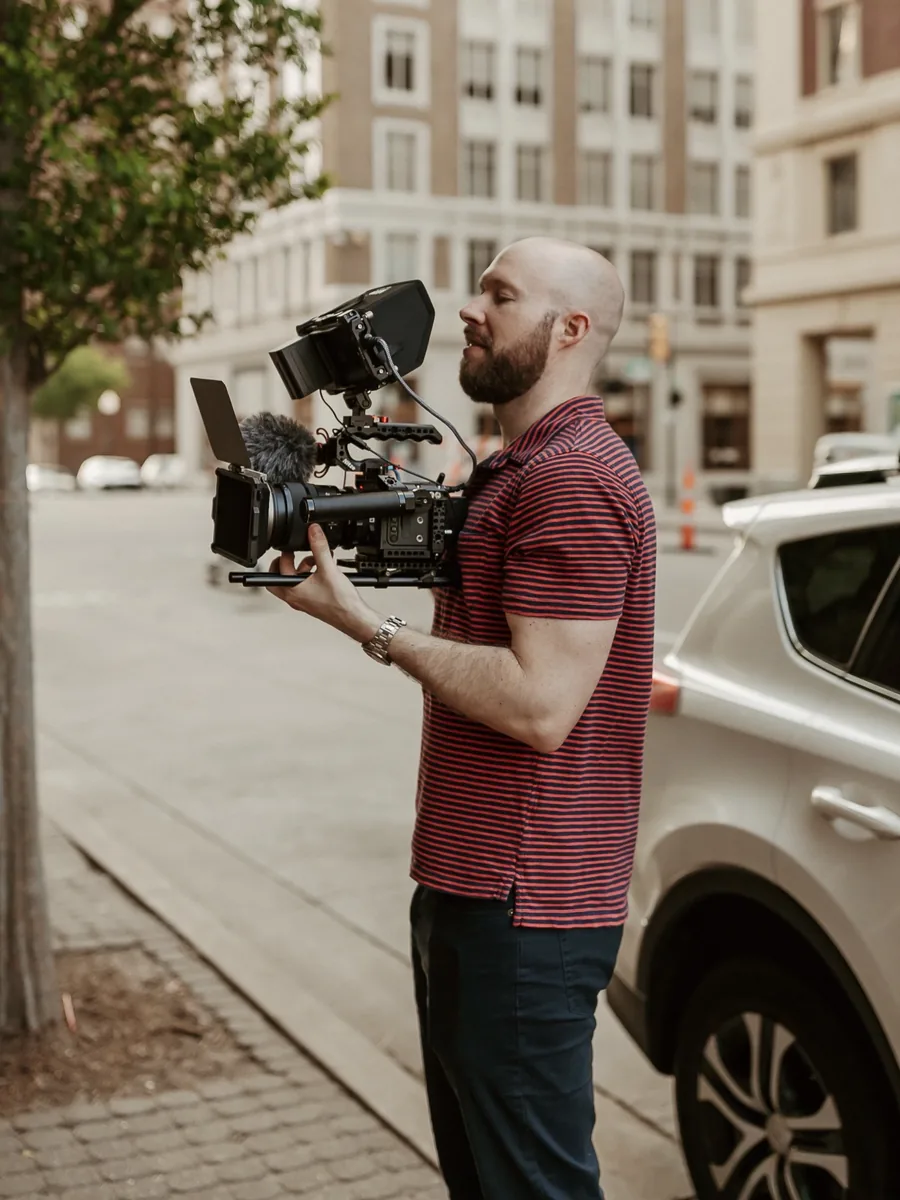
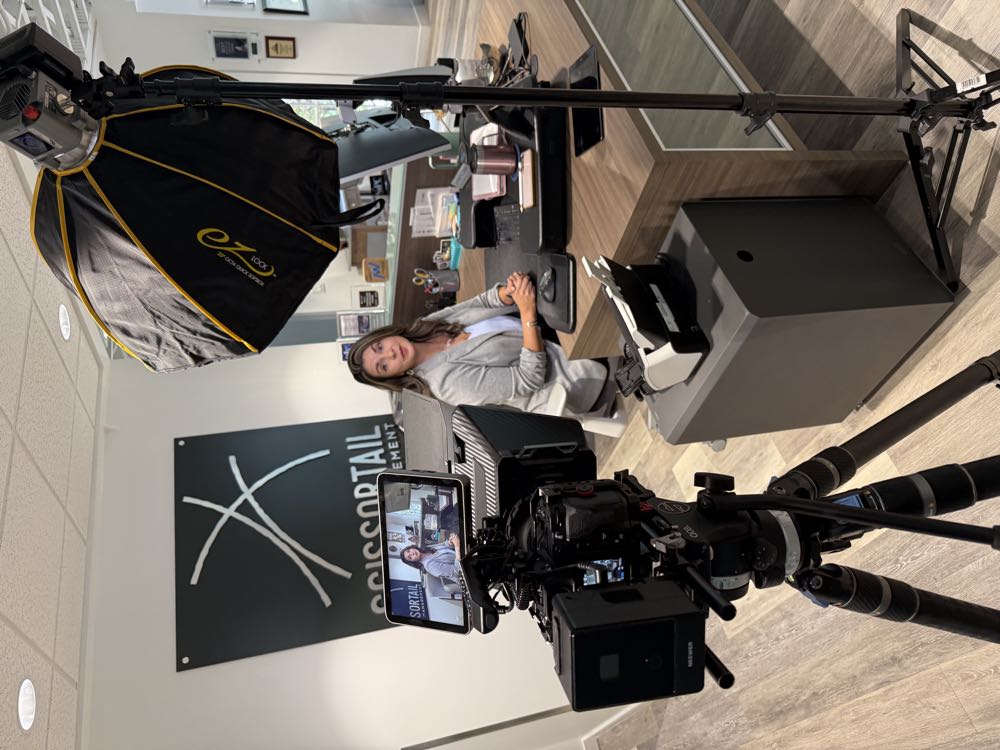
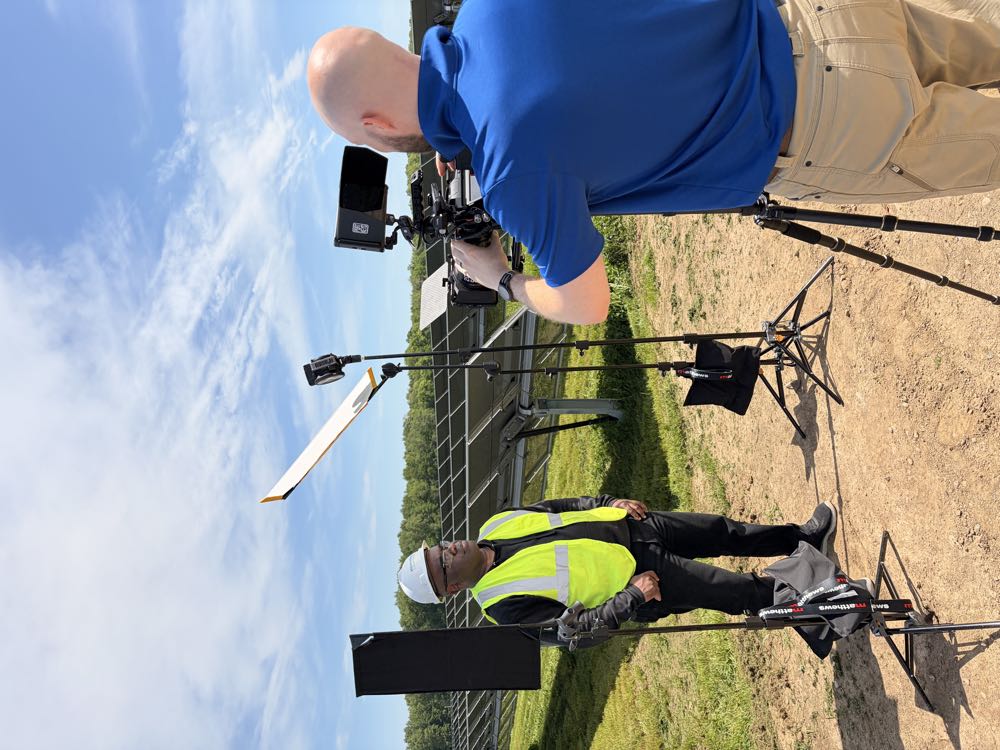
A quarter of video and photography out of one visit
Customer testimonials, where customers will sit for them
Shot in-house by the person you hired, not outsourced
Every file delivered to you, raw and edited. You own it.
A shoot with nowhere to run is an expensive brand film, which is why the footage is made against where it's going before a camera comes out of the bag. How a shoot day is run.
Next · 03 The roof — ads launch and managementThe roof
Built to the towns you work. Paced daily, not set and forgotten.
This is the part that puts the first two in front of people who have never heard of you. And the part most owners have already been burned on once.
A radius isn't a market
A circle drawn around a Tulsa shop crosses four counties and averages together towns that have nothing in common. Median household income in Jenks is $111,004. In Skiatook it's $57,480. Both sit inside the same thirty-mile ring.
Targeting all of it as one audience means paying the same to reach somebody who will never buy a twelve-thousand-dollar job as somebody who will. Campaigns get built to the towns the work is actually wanted in, and to the jobs you actually make money on, which is a different shape from a radius.
None of this starts until the two floors underneath it are standing. Ads are the only part of the engine that spends money every day it runs, so it's the last part switched on rather than the first.
Run on your own creative
The footage from the shoot day is what the campaigns run against, rather than a logo on a colored square.
Retargeting and fresh cuts
The people who already looked get seen again, and new creative goes in on a cycle before the account goes stale.
Paced daily
Budgets and audiences adjusted against what the account did yesterday, which isn't the same job as checking in monthly.
Traced, then read back to you
Conversion tracking so a lead points at the ad that made it, and a plain-English report you can get through in five minutes.
Advertising is worth starting above roughly $750,000 a year in revenue, with somebody able to answer the phone when it rings. Below that the foundation does more good than paid traffic does, and you'll be told so on the call rather than sold the ads anyway. How the campaigns are run.
Then · what all three of them producedProof
Ran ads at $10 a day and contracted $40,000+ in booked work.
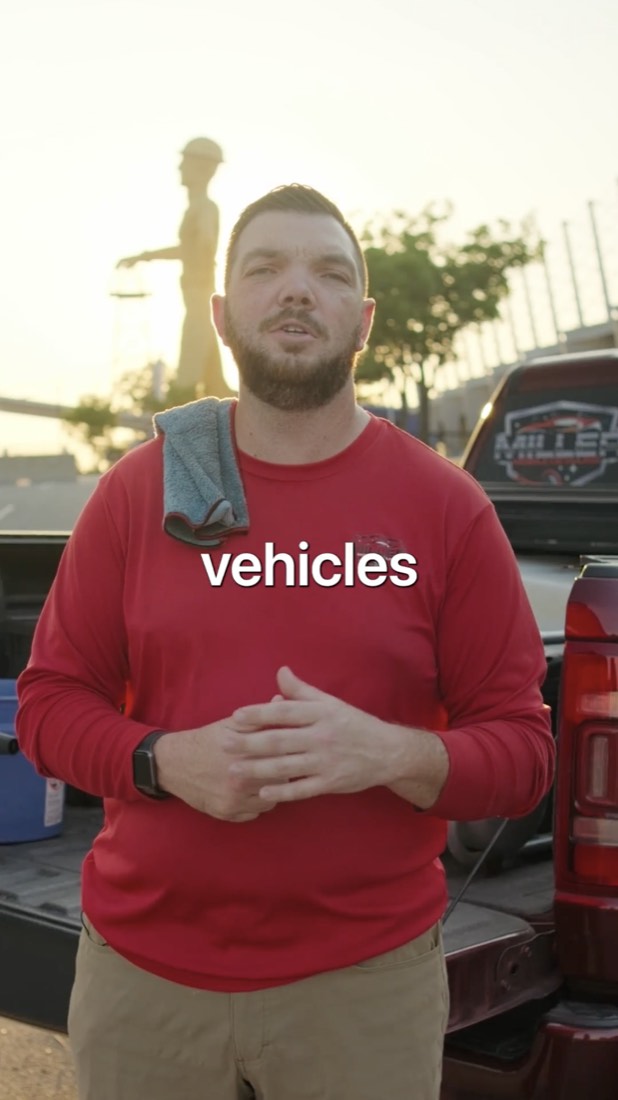
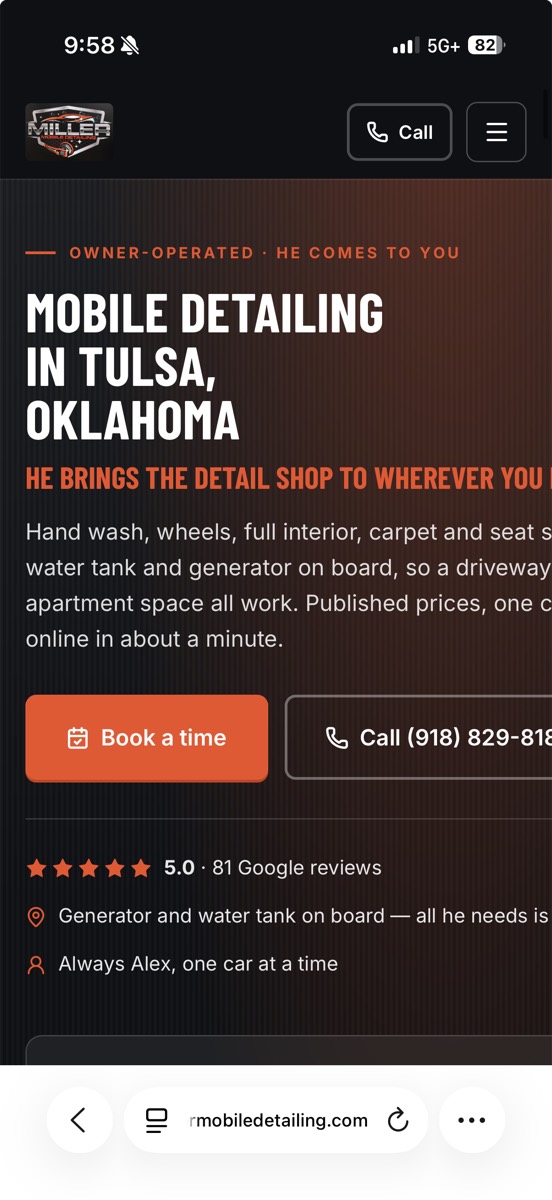
Miller Mobile Detailing
- Work contracted
- $40,000+
- Total ad spend
- $4,000
- Measured period
- 6 months
Metcalf Media rebuilt his Google profile, produced the photo and video, ran the ads against it, and built the website they pointed at. He booked $2,500 of work in the first week.
Packages
Three products. Bought in this order.
Nothing here is optional-extra. The foundation goes in first even when the ads are what you came for, because ads pointed at a business that can't answer them is how the money disappears.
Website + AI Automations
Monthly. The foundation. And it goes in first.
- Missed calls texted back automatically, so the job doesn't go elsewhere
- Every lead answered inside sixty seconds, day or night
- Follow-up that keeps going for a week instead of stopping after one call
- Review requests sent the moment a job is finished
- Every call and form traced to what produced it
- You come up for the jobs you want, in the towns you actually work
- Opens in under two seconds on a phone
- Written so Google and the AI answers can both quote it
- Two new guides published every month
- Your domain, your hosting, your accounts
Content Day
Quarterly. One day on location, a quarter of content.
- Scripts written before anyone arrives
- One production day at your own business, with your trucks and crew
- A quarter of video and photography from a single shoot
- Cut for Reels and for paid ads from the same footage
- Shot in-house, not outsourced
- Every file delivered to you, raw and edited
Ads Launch & Management
Monthly. The part that puts it in front of strangers.
- Campaigns built to your service area, not a radius
- Run from your Business Manager, billed to your card
- A flat fee, and no percentage of ad spend
- Paced and adjusted daily, not monthly
- Every lead texted back inside sixty seconds
- Missed calls answered automatically, so none of them just ends
- Conversion tracking so a lead traces to the ad that made it
- A plain-English report you can read in five minutes
The goal
Best known beats best, every time. We'd rather you were both.
Three separate jobs, and most companies are only doing one of them.
Found when they search
Not a five-page brochure that mentions your town once. This is what puts you in front of somebody typing "emergency plumber Broken Arrow" at 11pm.
Named when they ask an AI
More people now ask ChatGPT or Google's AI who to call instead of scrolling ten blue links. Those systems quote pages that answer plainly and name the business making the claim. Almost no local site is built that way.
Recognized when they see you
Then the content and the ads run behind it, so by the time they need you you're not a stranger with a logo. You're the one they've already seen.
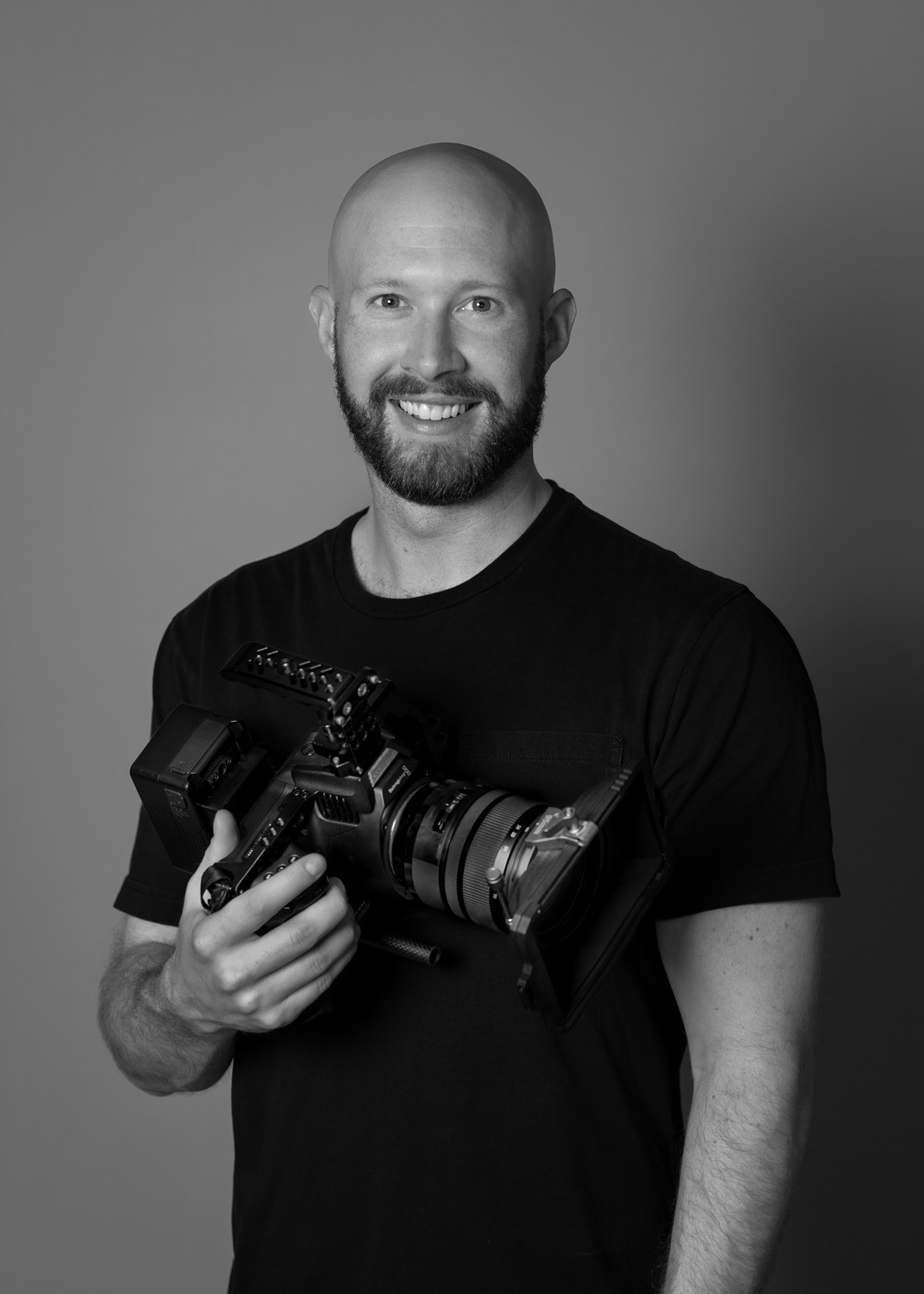
A note from Jeffrey
“Most agencies hand over a set of files or a monthly report and call it done. I would rather own the whole thing. The site, the content, the ads, and what happens after somebody picks up the phone. So there's one person accountable for whether it produces booked jobs.”
Answers
Questions owners ask.
How do I get more leads for my HVAC, plumbing or home services company in Tulsa?
The fastest route for most Tulsa service businesses is paid social pointed at a page built to convert, with automated follow-up behind it. That combination produces leads in weeks rather than the three to six months organic search takes. Metcalf Media builds this as one system called the Local Lead Engine: the strategy, the content, the ads and the site, run together rather than split across vendors.
How much does a website cost for a small service business?
Metcalf Media charges a flat monthly fee that covers the build, the hosting and ongoing changes, rather than a large one-off fee. A site nobody touches again stops ranking, so it's priced as something maintained rather than delivered. The figure is set on the call against what one booked job is worth to the business, because a company whose average job is $12,000 and one whose average job is $300 aren't answering the same question. For comparison, the national retainer companies commonly charge a local service business around $1,500 a month and host a website for it.
How do I get my business recommended by ChatGPT and AI search?
Answer engines quote pages that state the answer plainly in the first two or three sentences and name the business making the claim, and they largely don't run JavaScript, so the content has to be in the HTML that ships. Metcalf Media builds every site that way: question-shaped headings, complete answers up front, the business named in the third person, structured data on every page, and an llms.txt file for the crawlers. Most local websites fail all five of those tests, which is why so few of them get cited.
How many pages should a local service business website have?
One for every service you offer and one for every city you serve, which for most trades is thirty to fifty pages rather than the five a template gives you. Somebody searching for a specific job in a specific town should land on a page about that job in that town. Metcalf Media only builds a city page when there's something true and specific to say about that city. A thin page repeated ten times with the town name swapped will hold the whole site back.
I already tried Facebook ads and nothing happened. Why would this be different?
Usually because what was tried was boosting a post. Nobody wrote it, nobody filmed it, and nobody looked at the numbers afterwards. That's a different job from a scripted campaign with creative shot for it and someone pacing it daily. Far more often the campaign was fine and nothing behind it had been built: the leads arrived and got one call, two days later. Metcalf Media builds the follow-up before any spend goes live for that reason.
Next step
Find out where your marketing is losing booked jobs.
We’ll go through your lead sources, your follow-up, your creative and your tracking, and you’ll leave knowing what I’d do in your position. Including if the answer is that you shouldn’t do this yet.